What to Use Instead of Single-Use Plastic Coffee Pods (K-Cups)
Use a stainless steel French press or a refillable stainless K-Cup mesh pod. You get fresher coffee, save 50%+ on coffee costs, and stop throwing away plastic daily.
The Avoid Plastic Score: 9.4/10
Independent rating on swap utility & durability
The Verdict: Huge financial and environmental win. Buying whole beans or ground coffee cuts your coffee budget in half.
Why We Recommend Stainless Steel French Press
Zero plastic contacts boiling water, coffee tastes far richer, and bulk coffee grounds cost a fraction of single-serve pods.
Pros and Cons of Making the Switch
✓What's Great
- Saves hundreds of dollars per year compared to 70-cent pods
- Zero boiling water pumped through heated plastic tubing or pod shells
- Unbreakable double-wall metal keeps coffee hot for over an hour
✕What Sucks / Annoyances
- Takes 4 minutes to steep instead of 30 seconds on a pod machine
- Requires rinsing out coffee grounds into the compost/trash after brewing
People who strictly brew in an office breakroom where only single-serve pod machines are permitted.
If you already own a pod brewer, buy one $6 stainless steel reusable pod. Fill it with your favorite ground coffee and keep your machine.
Budget Alternative: Reusable Stainless Steel Pod Filter ($6 to $10) — A refillable mesh capsule fits inside Keurig machines and uses any regular bag of ground coffee.
Recommended Products for This Swap
Researched recommendations based on durability, material purity, and real customer feedback.
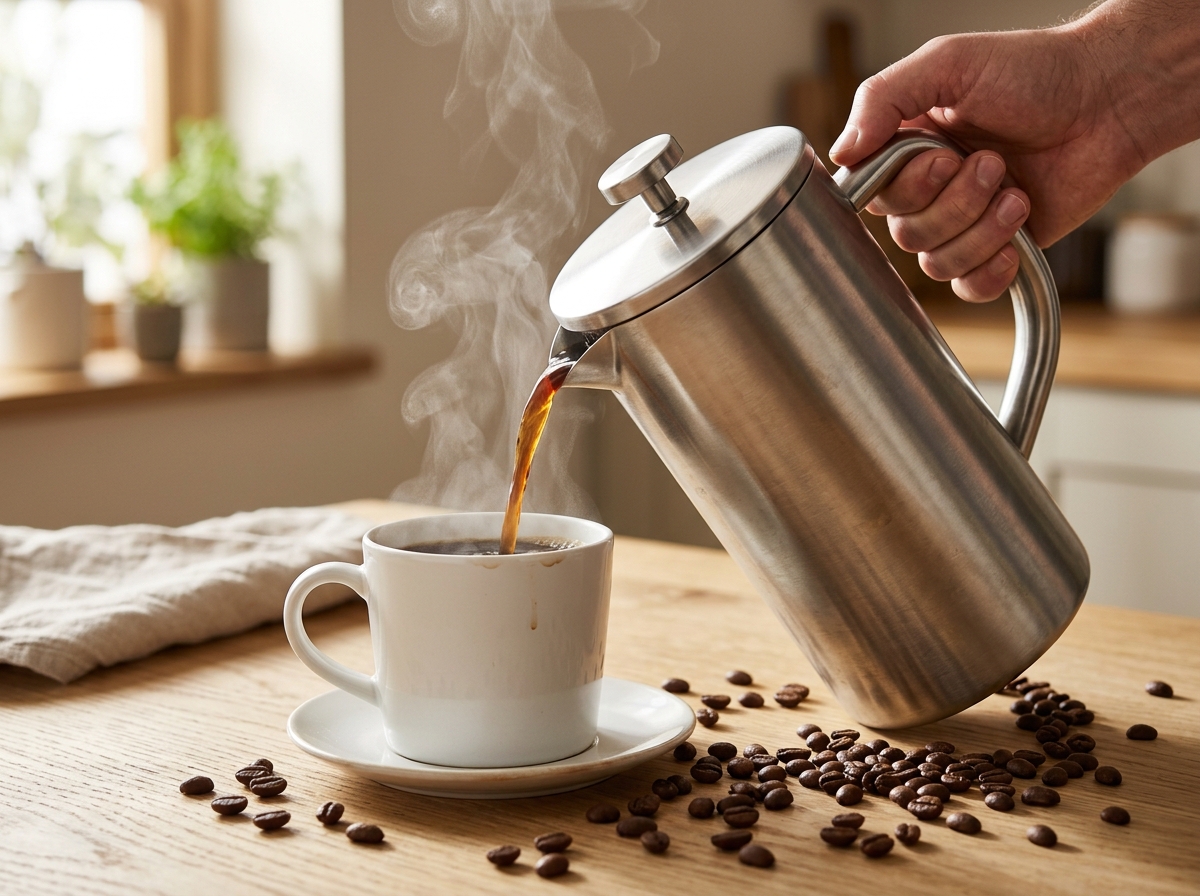
Secura Stainless Steel French Press (34oz)
Why it made our list: All-metal 18/10 steel construction, double-wall insulation, zero plastic parts.
Want our comprehensive comparison of all options?
Read our detailed guide, material breakdown, and multi-product reviews.
Practical Switching Tips
- 1.Dump used grounds into your garden or houseplant soil—coffee grounds make fantastic nitrogen-rich compost.
Frequently Asked Questions About Single-Use Plastic Coffee Pods (K-Cups)
Common questions and answers regarding materials, care, and plastic-free standards.
Over 10 billion single-use plastic pods end up in landfills every year. Their mixed material construction (plastic cup, foil lid, and wet grounds) makes them practically impossible to recycle.